What the Ozempic Halo Effect Means for Peptide Therapy
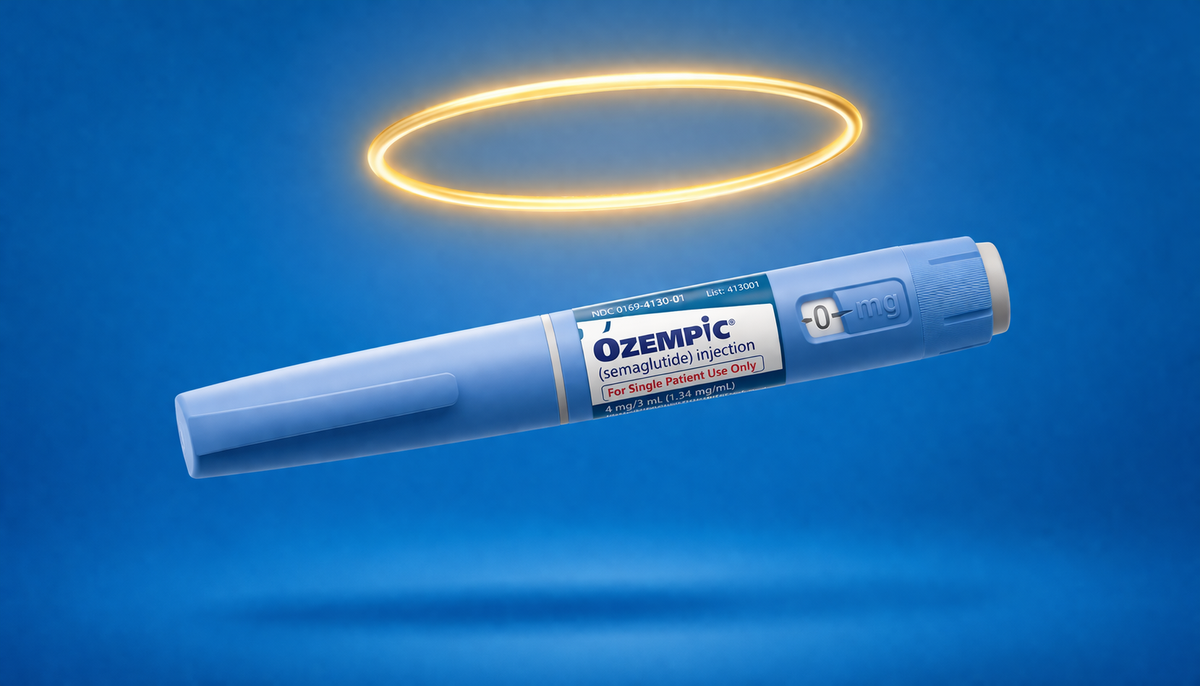
Semaglutide generated $29.3 billion in global revenue in 2024. It has been featured on the cover of Time magazine, debated in Congress, and discussed in conversations that have nothing to do with diabetes. Along the way, it did something unexpected: it made the word "peptide" a cultural touchstone for a generation of health-conscious consumers.
That visibility has been a double-edged development for the broader field of peptide therapy. On one hand, it has expanded public awareness and opened doors for legitimate clinical conversations. On the other, it has produced a halo effect — a cognitive shortcut where patients reason that because semaglutide is a peptide, and semaglutide is medically credible, other compounds marketed as peptides must carry similar credibility by association. That leap is not always warranted, and in some cases it has led people toward real harm.
What the Ozempic Phenomenon Actually Proved
Before dissecting the halo effect, it's worth being precise about what the semaglutide story actually established.
Semaglutide (Ozempic, Wegovy) is a GLP-1 receptor agonist — a synthetic peptide that mimics glucagon-like peptide-1, a naturally occurring gut hormone. It underwent years of phase 3 clinical trials enrolling tens of thousands of patients before receiving FDA approval. The STEP trials demonstrated that semaglutide 2.4mg produced average body weight reductions of approximately 15% over 68 weeks in adults with obesity. The SUSTAIN trials established its efficacy in type 2 diabetes. More recently, the SELECT trial showed cardiovascular mortality benefit even in patients without diabetes.
This is an unusually strong evidence base. The case for semaglutide and its successor tirzepatide is built on billions of dollars of clinical research, not preclinical animal studies or anecdotal reports. A 2026 systematic review and network meta-analysis in Obesity (Lim et al.) examining 15 randomized controlled trials with 14,059 patients confirmed tirzepatide as the most effective agent in the class for weight reduction, with semaglutide close behind.
What this proves is that GLP-1 receptor agonist peptides are remarkably effective for their approved indications. It does not prove that all peptides are effective, or that the evidence standards that validated semaglutide apply to any other compound.
Where the Halo Effect Goes Wrong
The halo effect shows up in several specific ways that are worth naming:
"Semaglutide is a peptide, so peptides work."
This is logically valid but misleadingly general. Water is a molecule, and aspirin is a molecule, but that doesn't mean all molecules have analgesic properties. Peptides are a molecular category, not a mechanism. The fact that one peptide has extraordinary clinical evidence tells us something about that specific peptide's mechanism, not about the category as a whole.
"If Ozempic can do that, imagine what BPC-157/ipamorelin/[other peptide] can do."
This reasoning treats different compounds with very different evidence bases as if they are interchangeable members of a category with proven benefits. BPC-157 is a different molecule from semaglutide, working through different mechanisms, for different applications, with a far less developed clinical evidence base. The comparison doesn't hold scientifically.
Using Ozempic's credibility to justify gray-market purchasing.
Perhaps the most dangerous manifestation of the halo effect: patients who reason that because legitimate peptide therapy exists, the product they are buying from an unregulated website must also be legitimate. The source of the compound matters as much as the compound itself. Ozempic is manufactured by Novo Nordisk under pharmaceutical-grade conditions with full regulatory oversight. A research peptide from an unlicensed vendor is not comparable.
What Ozempic's Success Does Mean for Peptide Therapy
The semaglutide story has genuinely expanded what is possible in several ways.
It established patient demand for injectable, subscription-based health therapy. The GLP-1 boom demonstrated that a large population of adults is willing to self-administer weekly injections for health benefits. This has normalized the injectable delivery model that many therapeutic peptides require, reducing a friction point that previously limited uptake.
It brought significant capital into the broader peptide space. The commercial success of GLP-1 peptides has accelerated investment in peptide drug discovery broadly, funding research into novel compounds and delivery systems that will benefit the entire field.
It started regulatory conversations. The GLP-1 compounding controversy — which produced significant FDA enforcement action against compounders marketing unapproved versions of semaglutide — has clarified the regulatory rules around compounding peptides more broadly. The 2026 reclassification of 14 peptides back to Category 1 occurred in a regulatory environment shaped partly by the intense public attention the GLP-1 debate created.
It put peptide therapy on the mental map of millions of patients. Awareness is a precondition for patient engagement. Many people who are now exploring BPC-157 or ipamorelin in a clinical context would not have done so without the cultural moment that semaglutide created.
How to Evaluate Any Peptide Claim Without the Halo
The framework for evaluating a specific peptide therapy should be independent of the Ozempic association. A few useful questions:
What is the evidence base, and what kind? There is a meaningful difference between 15 large randomized controlled trials (semaglutide) and a body of work consisting primarily of animal studies with limited human data (most other therapeutic peptides). Neither is disqualifying — early-stage human evidence is still evidence — but the uncertainty differs enormously.
Is the mechanism understood? A well-characterized mechanism of action is meaningful because it explains why the compound does what it does and helps identify appropriate use cases and potential risks. Compounds with well-described mechanisms can be used more rationally than those where the effect is empirically observed but not mechanistically understood.
Is there a clinical pathway with appropriate oversight? The question is not just "does this compound work" but "can I access it in a way that includes quality control, clinical assessment, and monitoring." The licensed 503A compounding pathway provides this for reclassified peptides. Gray-market sourcing does not.
What are your specific goals, and does the compound have evidence for those goals? Semaglutide's halo is strongest in weight management. If your interest is in wound healing, immune function, or cognitive support, the relevant evidence base is entirely different and should be evaluated on its own terms.
The Bottom Line for Patients
Semaglutide's success is real and remarkable. It has also created a market environment where the word "peptide" carries a borrowed credibility that many compounds have not earned on their own. The best thing patients can do is resist the shortcut.
That means asking specific questions about specific compounds, evaluating evidence with appropriate skepticism about its strength and applicability, and insisting on a licensed clinical pathway regardless of what you've read online. The field of peptide therapy has genuine promise that stands on its own — it doesn't need to borrow legitimacy from semaglutide, and it's better served when patients engage with it on accurate terms.
Frequently Asked Questions
Is semaglutide the same type of peptide as BPC-157 or ipamorelin?
No. Semaglutide is a GLP-1 receptor agonist that works through an entirely different mechanism from BPC-157 (a cytoprotective peptide) or ipamorelin (a growth hormone secretagogue). They are all peptides in the structural sense — chains of amino acids — but the similarity ends there. Their mechanisms, indications, evidence bases, and risk profiles are distinct.
Should I take GLP-1 peptides for weight loss alongside other peptides?
This is a clinical question that depends on your health profile, goals, and what compounds are involved. Some providers do combine GLP-1 therapy with growth hormone secretagogues, for example, based on rationale around body composition and metabolic health. Any combination should be managed by a licensed provider with appropriate monitoring.
Are there peptides as well-studied as semaglutide for other conditions?
Within the FDA-approved category, tesamorelin has reasonable evidence for its approved indication. Among compounded peptides, larazotide has clinical trial data for celiac disease. Most other therapeutic peptides are at earlier stages of human evidence development than semaglutide, which is exceptional by any standard.
Is Ozempic face (facial fat loss from semaglutide) a sign the drug is unsafe?
Facial fat loss is a recognized side effect of significant overall weight loss with GLP-1 therapy, not a sign of toxicity. It reflects the drug's effectiveness at promoting weight reduction across body compartments, which can include facial volume. It is a cosmetic concern for some patients, not a safety signal.
Sources
- Lim M, et al. Weight Loss With GLP-1 Agonists in Nondiabetic Adults: Systematic Review and Network Meta-Analysis. *Obesity.* 2026.
- Wilding JPH, et al. Once-Weekly Semaglutide in Adults with Overweight or Obesity (STEP 1). *N Engl J Med.* 2021.
- Lincoff AM, et al. Semaglutide and Cardiovascular Outcomes in Obesity without Diabetes (SELECT). *N Engl J Med.* 2023.
- McCall KL, et al. Safety analysis of compounded GLP-1 receptor agonists. *Expert Opinion on Drug Safety.* 2026.
- Jastreboff AM, et al. Tirzepatide Once Weekly for the Treatment of Obesity (SURMOUNT-1). *N Engl J Med.* 2022.
This content is for educational purposes only and does not constitute medical advice. Peptide therapies should only be pursued under the supervision of a licensed healthcare provider. Amino Clinic recommends consulting with your physician before starting any new therapy.